Each person gives a different value to each thing. For example, for me a good computer is worth a lot and therefore I would pay a good amount for a Macbook Pro because I know that it will pay off both for work and entertainment, it will last me many years and make my life easy in that time. But a cell phone is not worth as much; as long as it allows me to use WhatsApp, social networks and one or another application, and of course, that it is not a turtle, I am happy. I do not need anywhere near the best and it would weigh on me to pay more than about $5000 or $6000 ($250 - $300 USD) for one for me. This is ironic because I dedicate myself to programming mobile applications 😁.
It is financially unsustainable to give a lot of value to everything. You would have to be the son of Bill Gates. We cannot have the best of all things, but we can obtain the best that we need according to the value that those things bring to us. For example, I cannot have the best Macbook Pro and the best iPhone without suffering financially, but the best iPhone does not add more value to me than an average cell phone, and I can have the average cell phone.
This reminds me of something I once invented jokingly but that stuck with me as a small personal “rule”, I call it The Beats Audio Dilemma.
Beats Audio is a brand of headphones that was fashionable years ago. I remember when I saw the price in the store I said “And does that thing fly or what” 😂, but a friend who was with me told me “But it’s worth it, they sound very good”. That is, he gave more value to the product than I did. So returning to school (we were in the master’s degree) jokingly I made the following graph on the blackboard (I know, I’m a nerd 🤓):
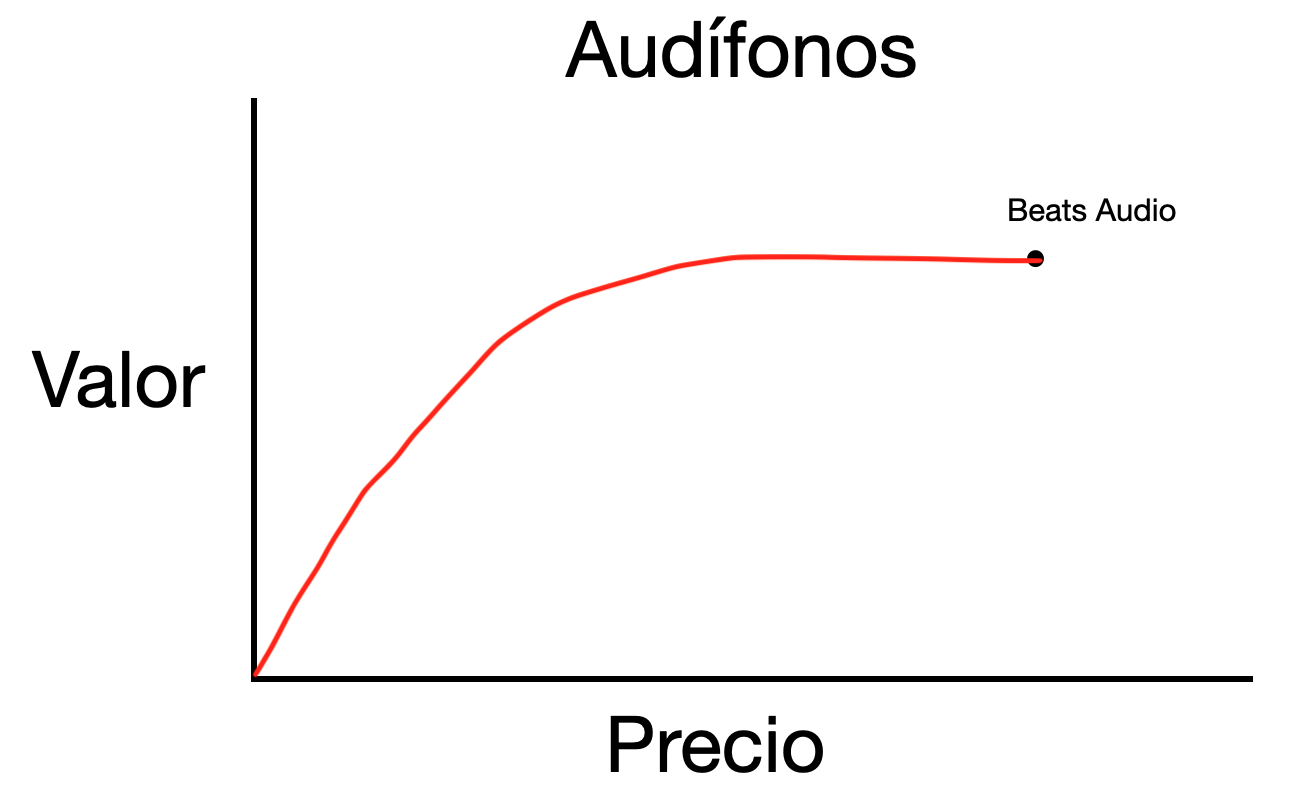
As you can see, in my opinion for headphones at the beginning a higher price (if you move to the right of the graph) delivers more value (the curve goes up): better sound, higher quality materials, etc. but there comes a time when at a higher price the value no longer increases, the curve flattens and there are brands to the right of that flat part that cost more but no longer increase the value. Beats Audio is very to the right of what I would be willing to pay. It may be that they sound a little better, but regarding the value it brings to me (someone who listens to music for entertainment or to accompany me while I work) the price that increases is not proportional to that value.
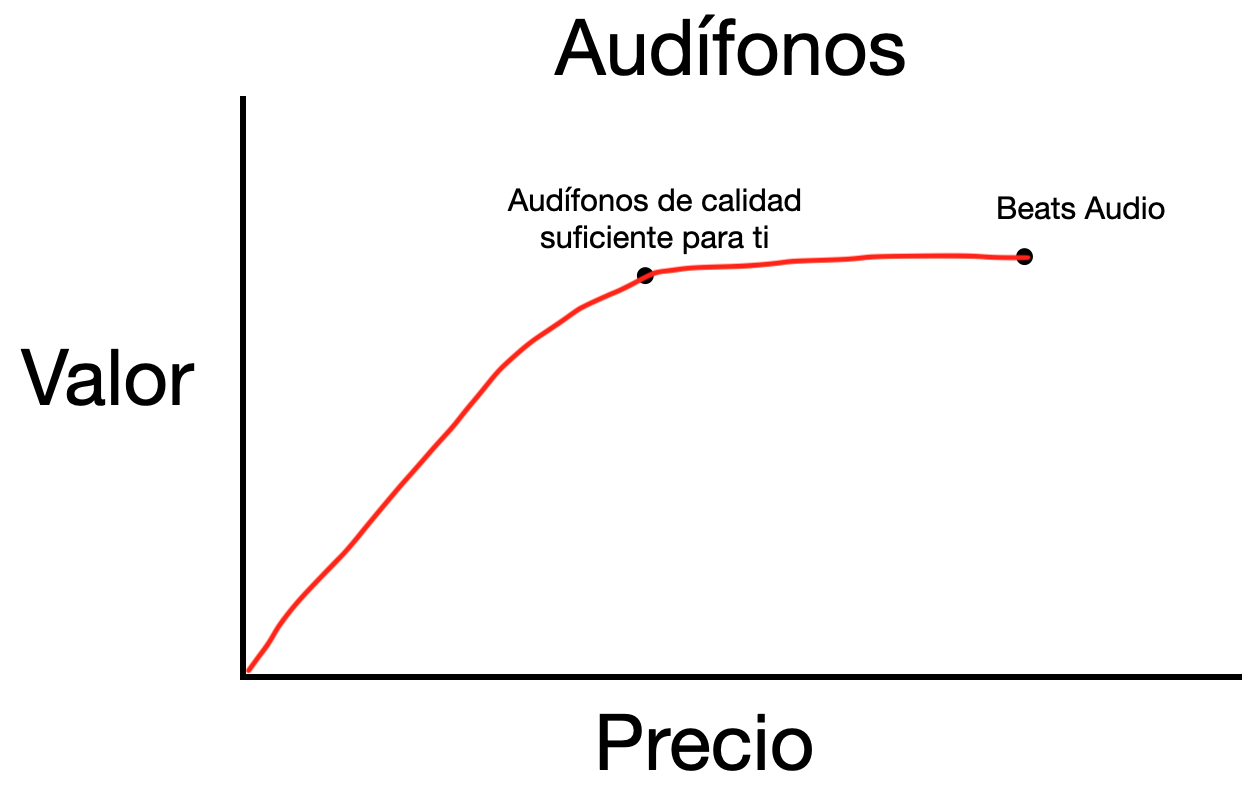
I think the key is to find the point where the value no longer increases and say “this is what I need”:
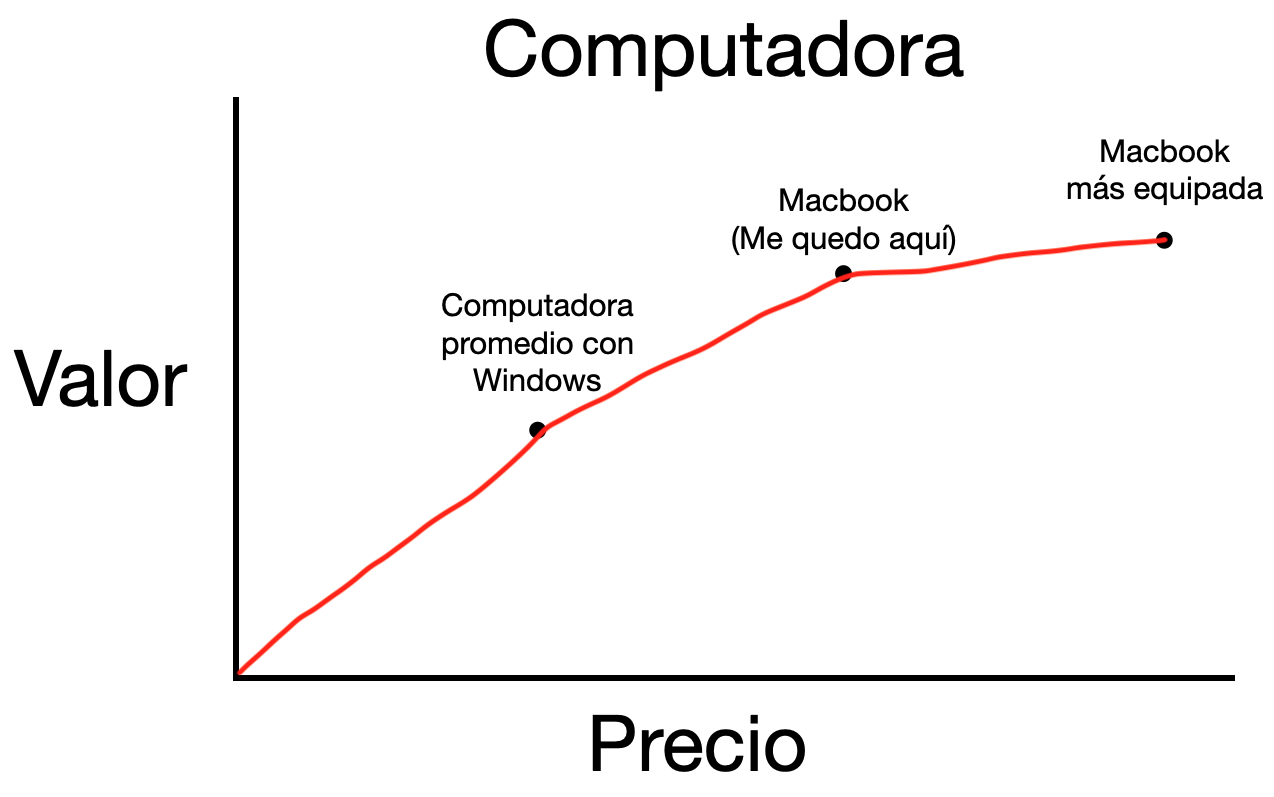
To finish a personal example of a computer, in this case I would be willing to pay more because for me a somewhat more expensive computer does increase in value, but there comes a time when I don’t need more because it would be too much for me.
This rule also served me when buying a car. As always they offered me different versions, when asking the differences they told me that the luxury one had leather seats, digital air conditioning, chrome handles and a start button, for ONLY $35,000 pesos more! ($1750 USD). Almost everything seemed irrelevant to me, what the hell is the use of the handle being chrome? Someone explain to me 🤷. I thought at least the car would have more power but no, only the visible changed. Although that damn start button almost convinced me, but I thought “Will that button make me happier? A year from now will my happiness or quality of life be greater because of the button?”. The truth is no and now that I think about it, I have never missed it and I am grateful not to have paid that extra.
Finally, I want to emphasize that simply liking something is also considered valuable, even if it does not have a pragmatic utility. For example a jewel or a watch, unless you are a scientist a more expensive watch is not going to give you a more exact time that is useful for anything, but they can have a value for you, it can make you feel better how you look. Equally, it may be that a luxury car does make you happier just for the finishes. As I said at the beginning, the value we give to things is personal. I would summarize the advice in learning to recognize the value that each thing has for us and not giving maximum value to everything.
I hope that although it started as a joke, this little rule helps you with your finances and the way you choose what you buy. Any doubt with pleasure we talk about it.